
We don’t start
with the
solution.
Before we build, we orient. We map the situation, locate the uncertainty, and define the dominant risk. Only then does the building begin.
[ TENSION // PREMATURE_ACCELERATION ]
The pressure to move can
make teams skip
understanding.
The instinct is to immediately scope and build. But applying a solution to an unexamined problem is the fastest route to systemic failure. Speed without orientation is just acceleration in the wrong direction.
The common failure pattern is painfully consistent:
Idea → Scope → Build → Discover the real problem. This inevitably leads to rework, compounding technical debt, and misaligned outcomes.
[ ORIENTATION // THE_MAP ]
Before changing the system,
understand the system.
We map the current reality. We define the people, systems, assumptions, and constraints that govern the space. This is not about documentation; it is about establishing a shared baseline of truth.
[ DIAGNOSIS // UNCERTAINTY_FIELD ]
Not everything unknown
needs to be solved.
We locate areas of high uncertainty within the map. Customer needs, technical feasibility, market readiness. We don't try to eliminate all unknowns—we identify the ones that actually matter.

[ FOCUS // DOMINANT_RISK ]
Not all risks deserve equal
attention.
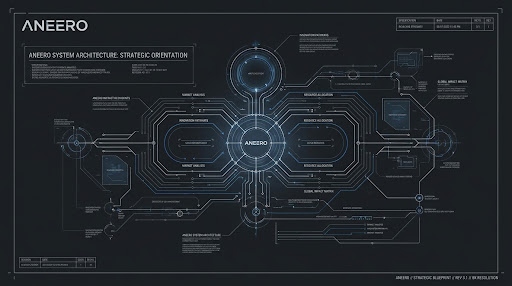
From the field of uncertainty, we isolate the Dominant Risk. This is the single variable that, if wrong, invalidates the entire premise. It is the focal point for all immediate action.
[ METHOD // INQUIRY ]
Building is only one way to
learn.
The next step should reduce the right uncertainty.
Identify Uncertainty
Formulate Question
Define Learning Action
ACTIVE OPERATION
Gather Evidence
Inform Decision
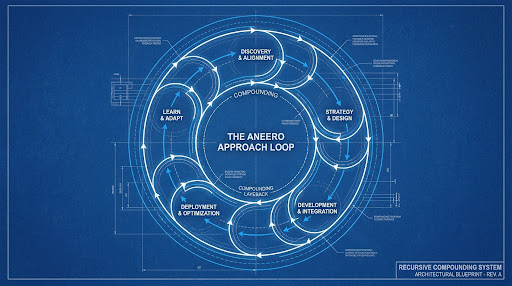
[ SYNTHESIS // THE_APPROACH_LOOP ]
The approach changes. The
discipline remains.
[ APPLICATION // CAPABILITIES ]
How this discipline
manifests.
This approach is not a theoretical exercise.
It is the operating system for how we
deliver across our core capabilities.
Product Strategy
Identifying what needs to be true for a product to succeed before committing to scale.
Product Engineering
Translating validated logic into robust, scalable software systems.
System Architecture
Designing resilient foundations that can evolve as uncertainty is reduced.
Data Systems
Structuring information flow to enable continuous learning and decision-making.
Start with a situation worth
understanding.
If you are facing complex uncertainty, the first step is to map it. Let's start the
conversation.